
Hot pour
Rubberized. Permanent. Flexes.
Heated to a liquid in a kettle, poured molten into the crack, sets within an hour. Bonds with the asphalt edges and stretches with seasonal temperature swings — so the seal doesn't crack back open in February.
Crack Repair · Norristown, PA
Catch them now. Skip the repave.
Cracks don't fix themselves — they get wider, deeper, and more expensive. We seal them now so you don't repave later.
We'll reply within the hour during the workday — evenings, first thing next morning. No pressure, no obligation.
Why it matters
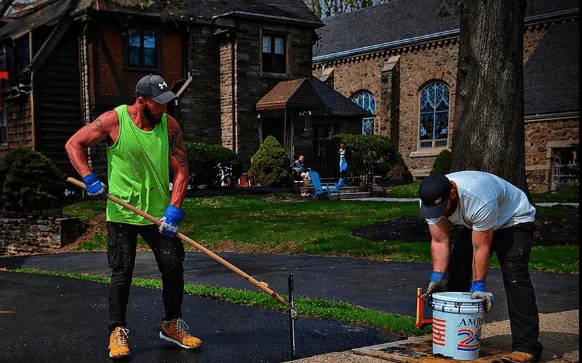
Cracks don't get smaller, and they don't get cheaper. The window to fix them with sealant is narrower than most people think.
Cracks let water reach the base layer. Freeze-thaw widens them. A hairline becomes a gap in a season.
Once asphalt fragments lift, sealant doesn't fix it. Patching is the next step. Repaving is the one after.
Sealant in a fresh crack is one of the lowest-cost things we do. Stops the water. Buys the surface years.
The sealants we use
Two sealants, two jobs. We carry both and pick per crack — not per job, not per quote.
Hot pour
Heated to a liquid in a kettle, poured molten into the crack, sets within an hour. Bonds with the asphalt edges and stretches with seasonal temperature swings — so the seal doesn't crack back open in February.
Cold pour
Pours straight from the container at ambient temperature. Best for thin, stable cracks that haven't started moving yet. Faster setup, no kettle on site — the right answer when the surface is mostly sound and we're catching things early.
Different cracks want different sealants. Picking the right one is the part you're paying for.
How it's done
What the repair actually looks like — from an open crack to a sealed surface.
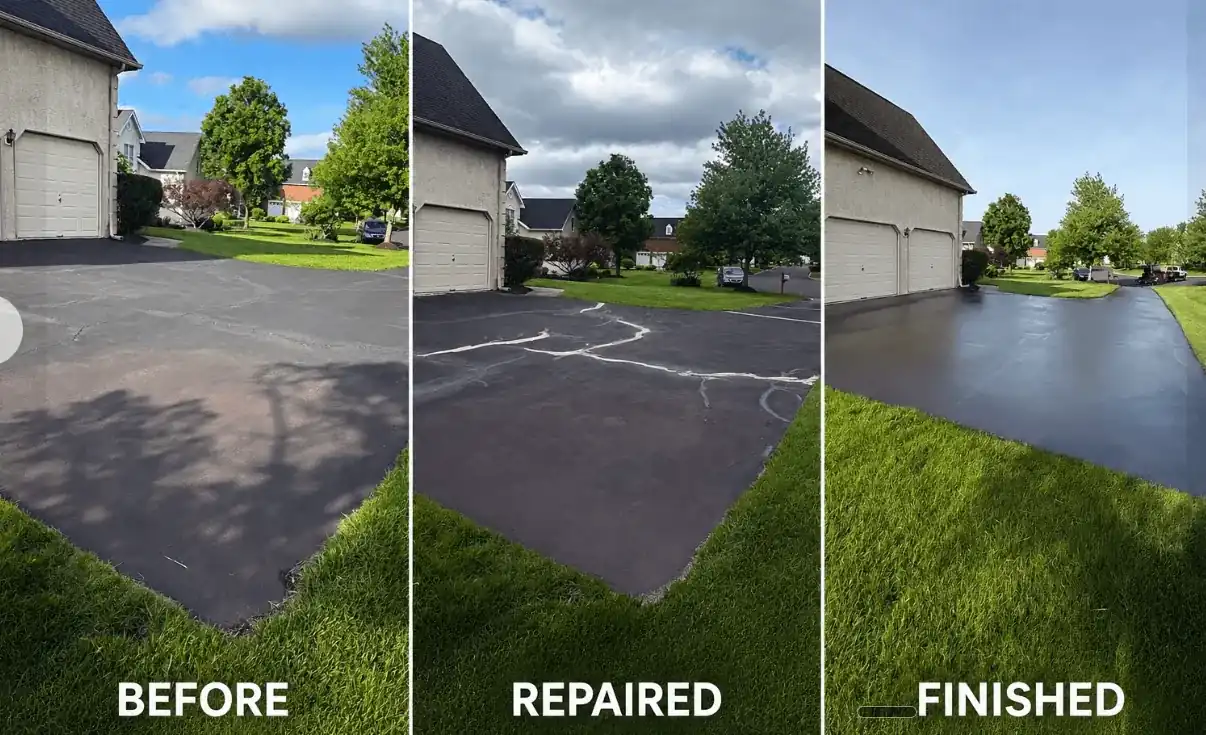
Before & After
What's included
Walk the surface with you. Flag the cracks worth treating, and the spots that need patching instead.
Written number. Fair and final. No bait-and-switch, no add-ons that should've been in the price.
Right sealant for each crack. Cone off the cure zone. Walk through with you before we leave.
Common questions
Free estimate
Tell us where and what — we'll get back to you with a real number, fast.
We'll text you back within the hour during the workday — evenings, first thing next morning.